The zócalos of Guatapé: what they are, their history and a walking route past the prettiest ones
Published on October 22, 2026
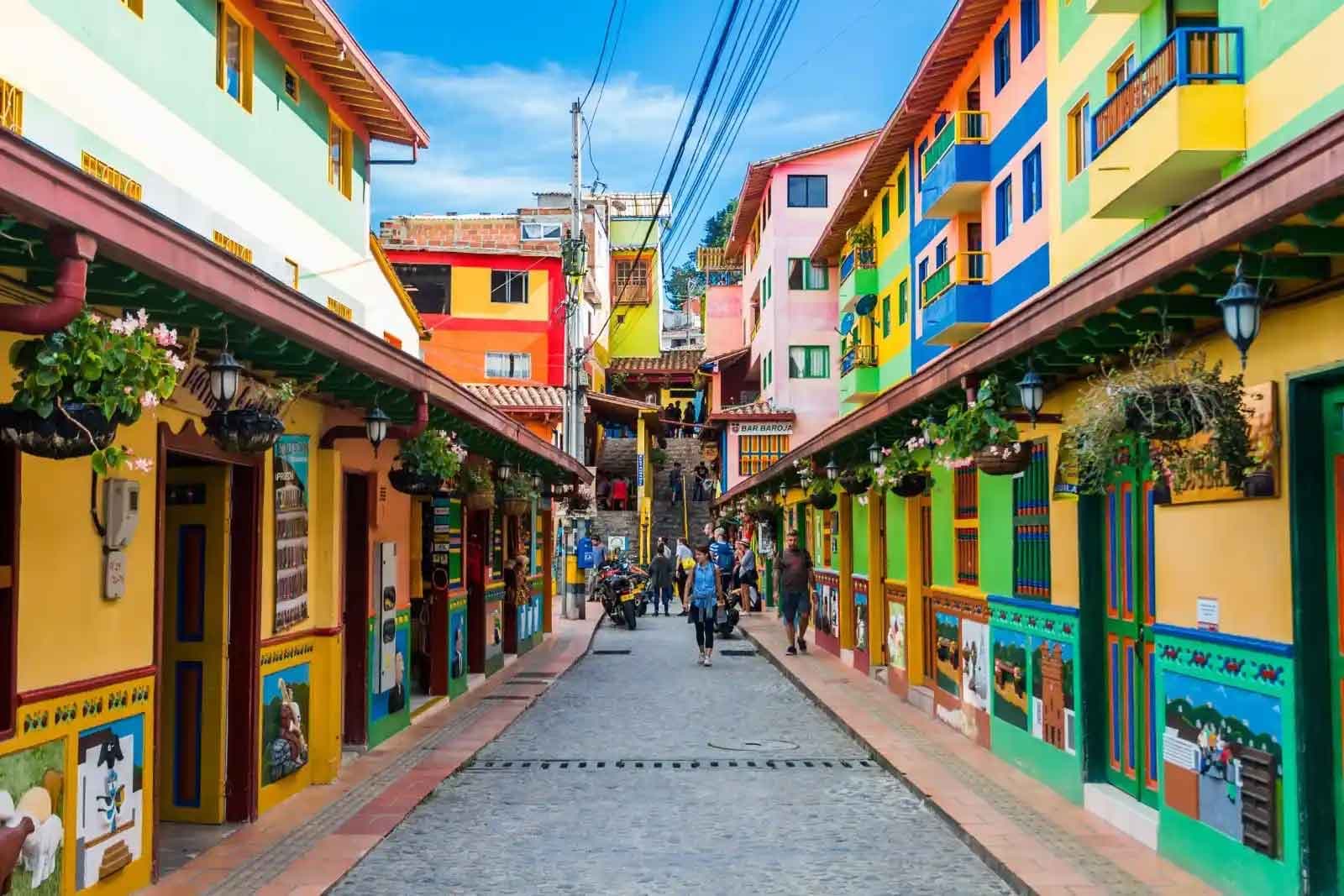
The first thing anyone notices on arriving in Guatapé is the colour. Every house in town has the lower part of its façade covered in hand-painted relief panels: sheep, baskets, suns, boats, scenes of country life and, increasingly, tributes to the rock and the reservoir. These are the zócalos, the tradition that made Guatapé one of the most photographed towns in Colombia.
This guide explains what they are, where they come from and lays out a ninety-minute walking route past the best of them.
What is a zócalo?
In architecture, a zócalo is the lower band of a wall, the strip that protects a façade from damp and knocks. In Guatapé that band, roughly 80 centimetres to a metre high, became a canvas: figures are modelled in cement as bas-relief and painted in bright colours that contrast with the rest of the house.
Each zócalo is a statement. Families choose the motif according to their trade, their history or their faith: a fisherman puts fish, a muleteer puts mules, a shop puts its goods. Walking through Guatapé is reading the town house by house.
The history of the zócalos
The tradition began in the early twentieth century, when houses already had plain zócalos painted in a single colour and a few neighbours started decorating them with simple figures, first sheep and geometric patterns. Over the years the reliefs became more elaborate and went from exception to unwritten rule: a house without a zócalo looked unfinished.
The second chapter came with the reservoir. When Medellín's public utility flooded the valley in the 1970s to build the dam, the old town of El Peñol disappeared under water and Guatapé lost much of its farmland. The town responded by betting on tourism, and the zócalos went from household custom to collective identity. Today the municipality looks after their conservation, there are craftsmen dedicated to making and restoring them, and a festival celebrates them every year.
Walking route through the zócalos of Guatapé
The full route takes between one hour and ninety minutes at an unhurried pace, with photo stops.
- Main square (Plaza de Simón Bolívar). Start here. The houses on all four sides carry some of the oldest and best-preserved zócalos, and the church of Nuestra Señora del Carmen marks the centre.
- Calle del Recuerdo. One block from the square. This is the town's most famous street: façades in every colour, wooden balconies and zócalos that narrate local history, from the muleteer to the reservoir. It is the photo everyone takes home.
- Plazoleta de los Zócalos. The small stepped plaza where the tradition is displayed as an open-air museum. Here you find reliefs dedicated to the rock, to old El Peñol and to trades that no longer exist.
- The streets from the plaza down to the waterfront. Between the plazoleta and the water every block has a surprise: modern zócalos with kayaks and motorboats next to classic ones with hens and baskets.
- The waterfront (malecón). Finish facing the reservoir. Boat trips leave from here and there are cafés with a view of the water to close the walk.
Tip: go early in the morning or after 4 pm. At midday the light is harsh for photos and the streets fill with day tours.
Getting to Guatapé
The town is two hours from Medellín on the Medellín–Bogotá highway. Our guide to getting to Guatapé covers the bus, driving and day tours. If you stay at Atma Villas, the town is 15 minutes by boat and 10 by car from Marina Navegar, so the zócalo route fits comfortably into an afternoon.
Zócalos and El Peñol rock in one day
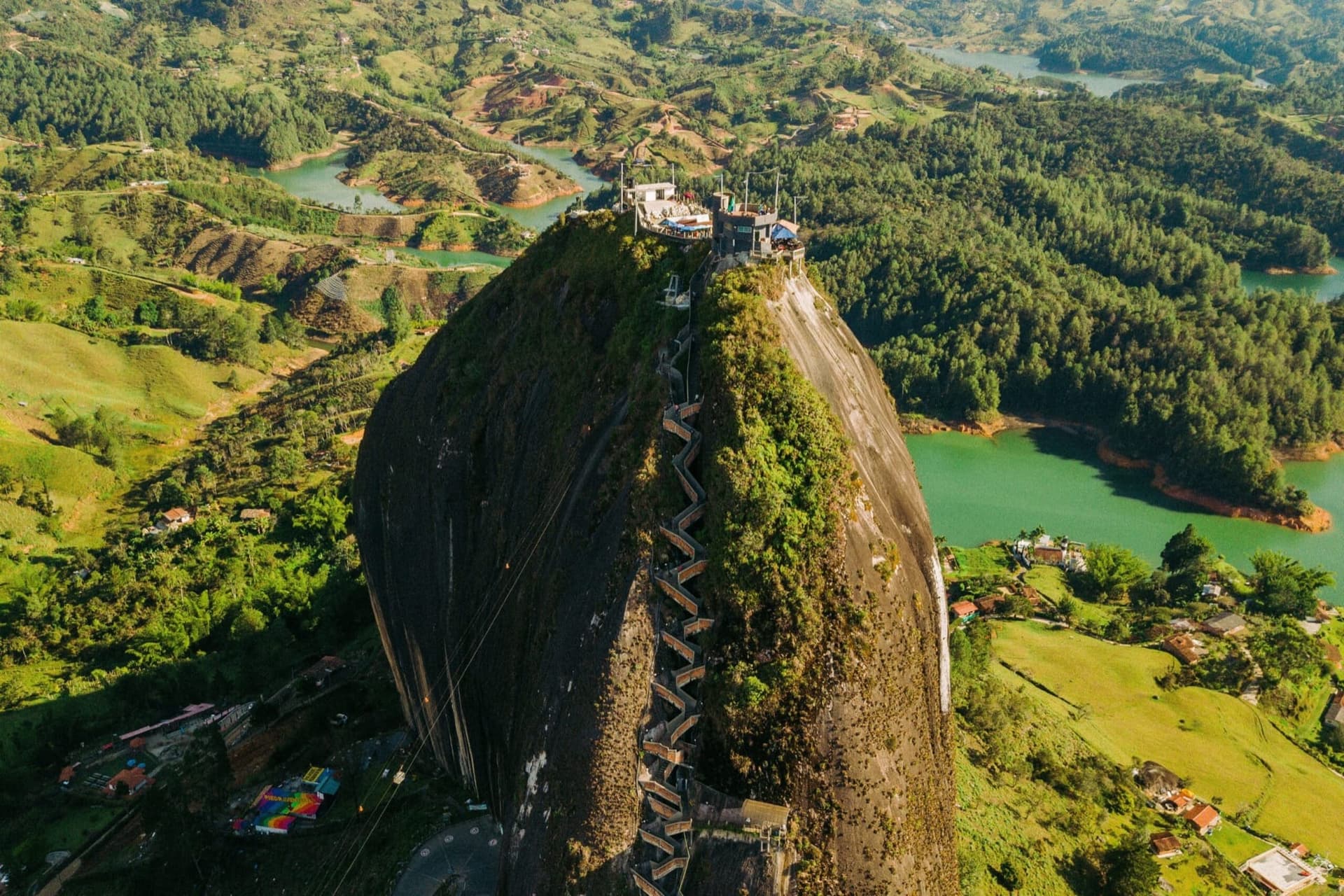
Most visitors combine the two. The order that works best: climb El Peñol rock first thing, have lunch in town and walk the zócalo route in the late afternoon, when the sun and the crowds ease off. If you sleep on the reservoir, the next morning's sunrise completes the postcard.
Frequently Asked Questions
What are the zócalos of Guatapé?
Hand-painted relief panels covering the lower part of the façades. Each one represents the trade, history or faith of the family living in the house.
Why does Guatapé have zócalos?
The tradition started in the early twentieth century as household decoration and became the town's identity after the reservoir was built, when Guatapé turned to tourism.
Where are the prettiest zócalos in Guatapé?
On Calle del Recuerdo, in the Plazoleta de los Zócalos and in the blocks around the main square.
How long does the zócalo walk take?
Between one hour and ninety minutes on foot, with photo stops. The town is small and everything is a few blocks apart.
Can you do the zócalo route and climb the rock on the same day?
Yes. The ideal plan is to climb the rock in the morning and walk the town in the late afternoon.