History of El Peñol rock: from sacred stone to Colombia's icon
Published on October 23, 2026
El Peñol rock is today the most recognisable image of Antioquia, but for most of its history it was something quite different: a sacred stone, a summit nobody had reached and, later, the cause of a quarrel between two neighbouring towns. Here is the whole story, in order.
A 65-million-year-old rock
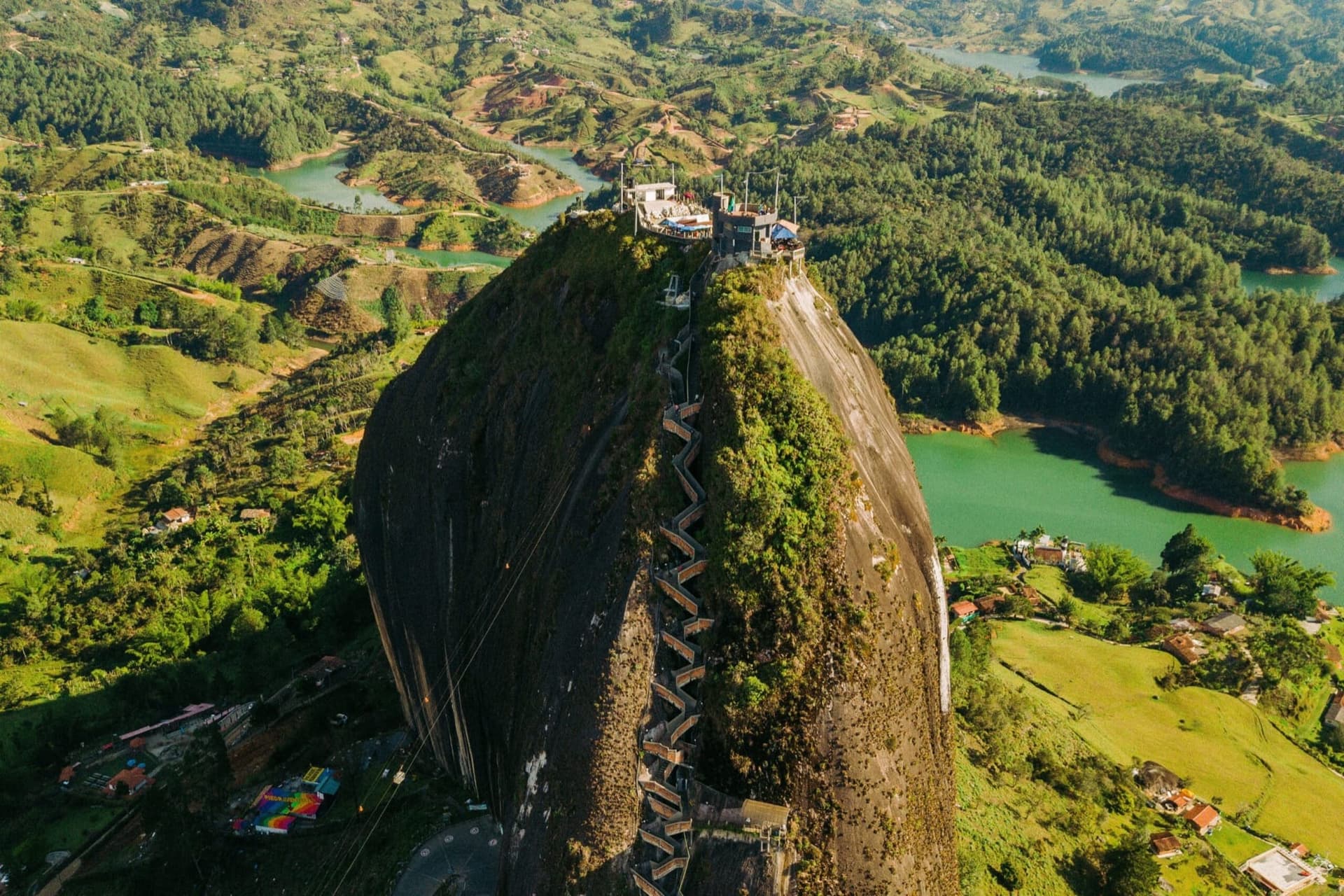
The monolith is a granite and quartz-diorite formation around 65 million years old. It stands about 220 metres above its base, its summit is 2,135 metres above sea level and it is estimated to weigh more than 10 million tonnes. What you see is only part of it: two thirds of its volume lies underground.
The rock of the Tahamí people
Long before tourists, the rock was a place of worship for the Tahamí people who lived in this part of eastern Antioquia. They called it "Mojarrá" or "Mujará", a word meaning stone or crag. It was a landmark and a sacred site, and legends grew around it that local farmers kept telling for centuries.
1954: the first ascent
For centuries nobody reached the top. The walls are almost vertical and the only possible route is a crack running from top to bottom. In July 1954, Luis Eduardo Villegas López, with Pedro Nel Ramírez and Ramón Díaz, set out to climb it. It took them five days: they wedged wooden boards into the crack, one above the other, to gain height and rest along the way.
When they reached the top they looked out over a valley of farms and pasture, not the lake of islands you see today. The feat turned the rock into a destination, and the crack they used is exactly where the staircase climbs now.
The staircase and its 740 steps
After the first ascent a concrete staircase was built into the crack, later reinforced with railings, landings and a multi-storey lookout at the top. Today there are 740 numbered steps and the climb takes 20 to 30 minutes. The rock sits on private land owned by the Villegas family, descendants of the first climber, who run the entrance. It was declared a National Monument in 1940.
The town that went under water
The chapter that changed the landscape came in the 1970s. To generate power, Empresas Públicas de Medellín built the Peñol–Guatapé dam and flooded the valley. The old town of El Peñol disappeared under the water and its people were moved to a new town built a few kilometres away. A replica of the old square and church can be visited today, and a cross on the reservoir marks where the church stood.
With the flooding, water surrounded the rock on almost every side and the view from the top became the one we know: hundreds of green islands and peninsulas on blue water. That view is what made the rock the most visited sight in eastern Antioquia.
The fight over the rock and the letters G and U
The rock sits right on the border between Guatapé and El Peñol, and both towns claim it. The dispute peaked when people from Guatapé began painting their town's name on one face of the rock in giant white letters. They had painted the "G" and part of the "U" before people from El Peñol climbed up to stop them.
The half-finished letters are still there and are one of the details visitors photograph most. That is why the rock has so many names: Piedra del Peñol, Peñón de Guatapé, the Guatapé rock or simply La Piedra, depending on who you ask.
The rock today
El Peñol rock now draws visitors from all over the world, with restaurants and shops at the foot of the staircase and drink stalls and the best view of the reservoir at the top. Practical information, hours, ticket price and how to get there, is in our complete El Peñol rock guide, and the story of the lake in the secret of the Guatapé reservoir.
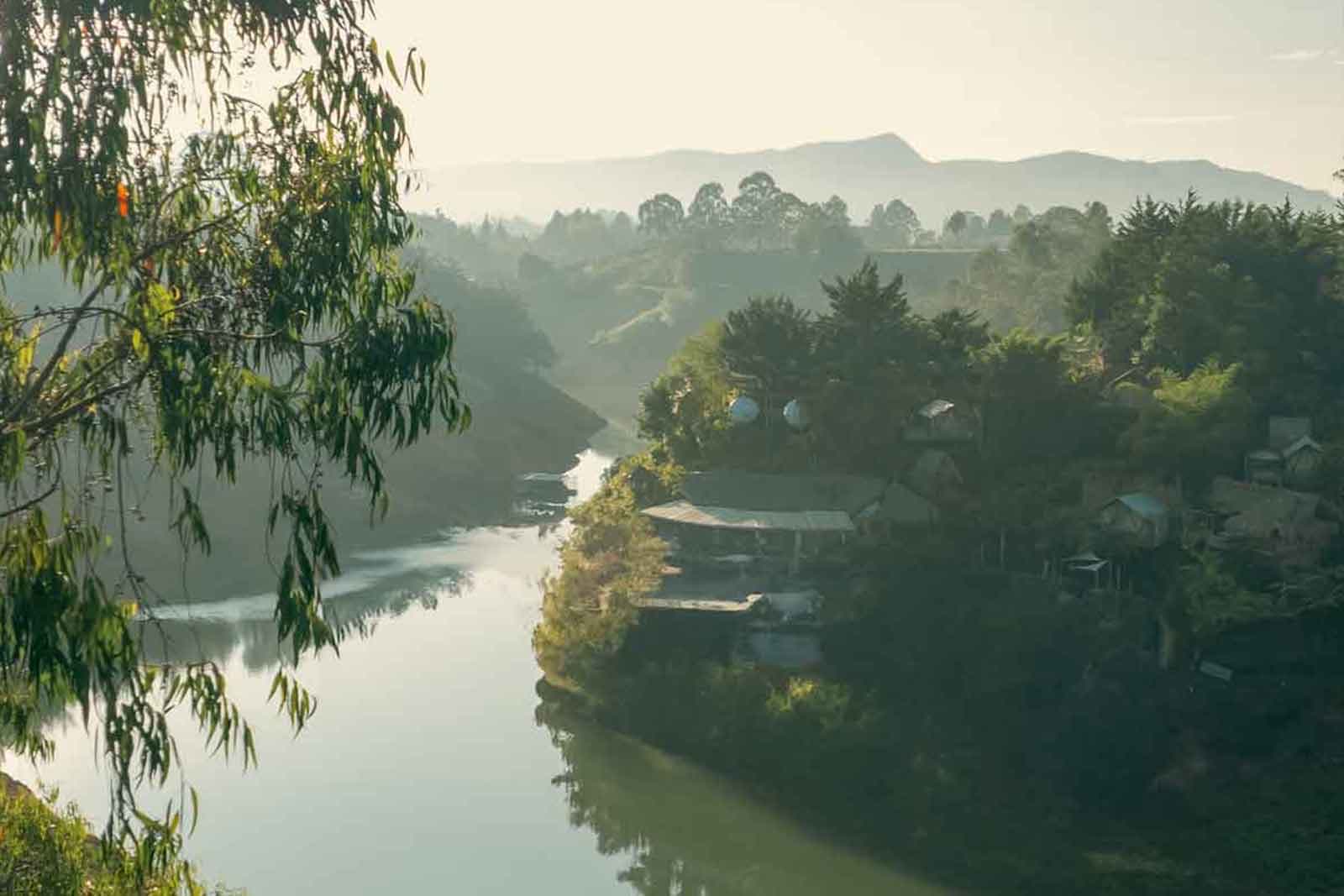
To see it from the water, the Atma villas look out on El Peñol rock at sunrise, 15 minutes by boat from the marina.
Frequently Asked Questions
Who first climbed El Peñol rock?
Luis Eduardo Villegas López, with Pedro Nel Ramírez and Ramón Díaz, in July 1954. It took five days using boards wedged into the rock's crack.
Why does El Peñol rock have the letters G and U?
People from Guatapé began painting their town's name on the rock during the dispute with El Peñol over who it belongs to. People from El Peñol stopped them, leaving only the G and part of the U.
What does "Mojarrá" mean?
It is the name the Tahamí people gave the rock, meaning stone or crag.
What happened to the town of El Peñol?
It went under water in the 1970s when the Peñol–Guatapé dam was built. Its people moved to a new town, and a replica of the old one can be visited.
Who owns El Peñol rock?
It sits on private land owned by the Villegas family, descendants of the first climber. It was declared a National Monument in 1940.