

In the heart of Antioquia, surrounded by green mountains and colorful towns, lies one of Colombia’s most stunning landscapes: the Guatapé Reservoir. At first glance, it looks like a natural paradise shaped over centuries, but beneath its calm waters lies a little-known history that permanently transformed the region.
Today, the reservoir is one of the country’s most visited tourist destinations and a must-stop for travelers seeking authentic experiences in Colombia. Its islands, channels, and viewpoints attract visitors drawn to nature, water sports, wellness, and paisa culture. Yet few people know the true origin of this place, or how it went from an agricultural valley to one of Antioquia’s most iconic landmarks.
In this article, you’ll uncover the secret of the Guatapé Reservoir: its history, curiosities, cultural impact, and the experiences that make this destination a truly unique place to disconnect and reconnect with nature.
The Importance of the Guatapé Reservoir
The Guatapé Reservoir is not only one of Colombia’s top tourist attractions, it’s also a critical piece of the country’s hydroelectric energy system, supplying power to much of Antioquia and other Colombian regions.
Over time, what began as an infrastructure project evolved into an internationally recognized travel destination. The reservoir’s waters created an entirely new landscape, filled with small islands, natural inlets, and panoramic views that now draw thousands of visitors each year. This process also tells part of the story of water in Antioquia, from energy generation to recreational use and conservation efforts.
The combination of nature, adventure, and culture has positioned Guatapé as one of the best examples of eco-tourism in Colombia. Its proximity to Medellín also makes it an ideal escape for both domestic and international travelers.
History of the Reservoir
The story of the reservoir began in the 1960s, when Empresas Públicas de Medellín launched an ambitious hydroelectric project in the region. The goal was to harness Antioquia’s water resources to generate energy and support the department’s industrial growth.
To make it possible, large stretches of land had to be flooded, land where roads, farmland, and small rural communities once existed. Many families were forced to leave their homes and adapt to an entirely new reality.
While the project brought significant changes for the local population, it also opened the door to new economic opportunities tied to tourism and recreational activities.
Today, remnants of the old rural landscape remain submerged beneath the reservoir’s waters, making this a place layered with memory and history.
A Landscape Transformed
One of the most fascinating aspects of the Guatapé Reservoir is how completely it reshaped the natural environment. What were once mountains and agricultural valleys is now a vast mirror of water surrounded by hundreds of small islands.
From certain vantage points, especially from the famous Piedra del Peñol, the landscape resembles a natural labyrinth. This unique geography is precisely why so many people consider Guatapé one of the most beautiful places in Colombia and one of the country’s most unmissable travel experiences.
The contrast between the blue of the water, the green of the mountains, and the colorful facades of the town creates an atmosphere that’s hard to find anywhere else in the country.
Tourist Attractions in Guatapé
Piedra del Peñol
Piedra del Peñol is, without question, the region’s most iconic attraction. This massive natural monolith, rising more than 200 meters, has become one of the most impressive viewpoints in South America and one of the most emblematic sights in Colombia.
To reach the summit, visitors climb more than 700 steps. While the ascent can feel demanding, the reward is a breathtaking panoramic view of the reservoir and the mountains of Antioquia.
Beyond its tourist appeal, Piedra del Peñol is also steeped in local stories and legends. For many years, indigenous communities considered this rock formation a sacred place and a spiritual reference point within the territory.
Today, climbing the rock is one of the essential experiences for first-time visitors to Guatapé.
Hiking Trails
Beyond the rock, the region offers a variety of hiking routes ideal for exploring nature at a slow, sustainable pace.
Many trails wind through forests, mountains, and natural viewpoints offering different perspectives of the reservoir. These walks are perfect for travelers looking to step away from the pace of city life and engage more deeply with their surroundings.
Some routes also lead to small nearby villages where traditional paisa customs are still very much alive.
Water Sports
Thanks to the reservoir’s size, Guatapé has become one of the best water sports destinations in Colombia.
Among the most popular activities:
- Kayaking
- Paddleboarding
- Boat tours
- Jet skiing
- Wakeboarding
- Recreational fishing
These experiences let you explore the landscape from the water and discover hidden corners of the reservoir that can’t be seen from land.
For many travelers, sailing across the reservoir at sunset is one of the most memorable moments of the entire trip.
Paisa Culture and Traditions
Local Gastronomy
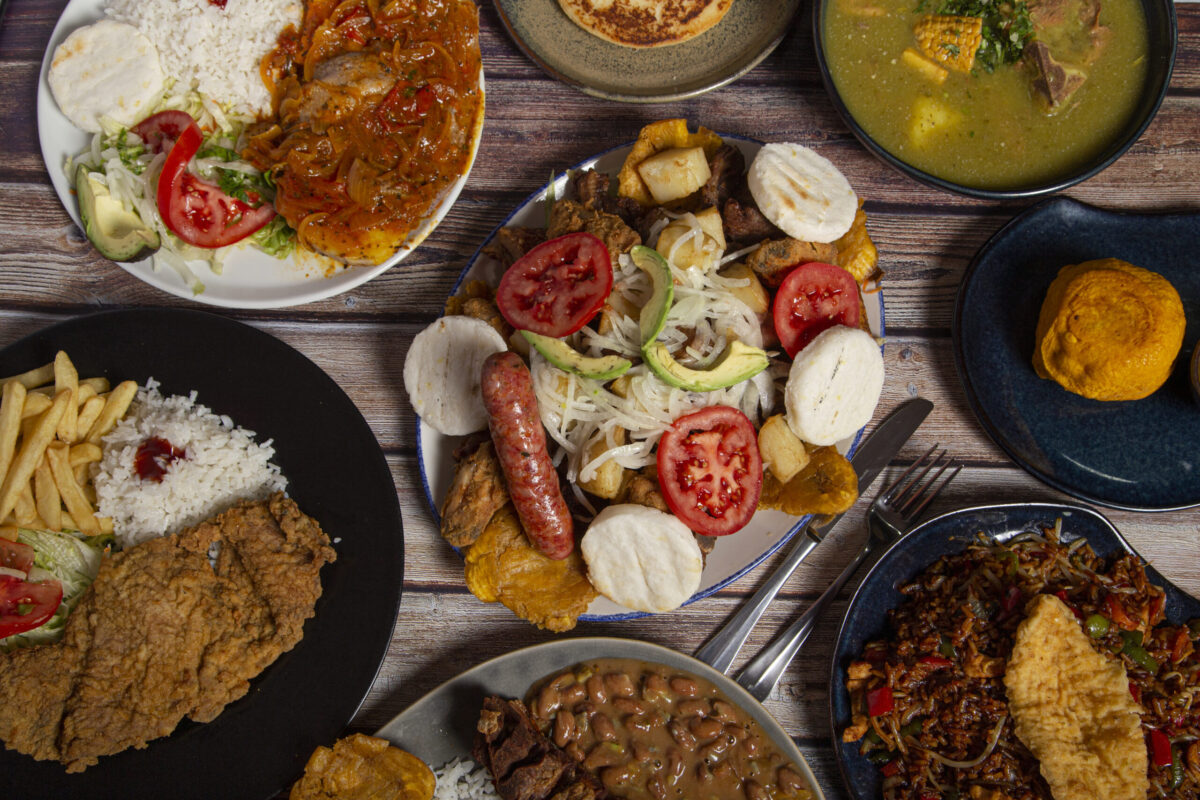
Local food is a fundamental part of the Guatapé experience. Paisa cuisine is defined by traditional flavors and recipes passed down through generations.
Some of the most representative dishes include:
- Bandeja paisa
- Antioquian arepas
- Frijoles (bean stew)
- Fresh trout
- Traditional sweets
Many local restaurants blend traditional ingredients with more contemporary approaches, creating unique dining experiences with views over the reservoir.
Antioquia’s Traditions
Paisa culture is known for the warmth of its people, a deep connection to tradition, and a strong sense of community. These traditions come alive in local festivals, markets, and neighborhood gatherings that keep the memory of the territory alive.
In Guatapé, this cultural identity is most visibly expressed through the famous zócalos, decorative bas-relief panels that adorn the facades of homes and tell stories of everyday life, nature, and local customs.
Every street in town conveys a distinct visual identity that has made Guatapé one of the most photogenic villages in Colombia.
Eco-Tourism in Colombia
The Importance of Eco-Tourism
In recent years, eco-tourism in Colombia has grown significantly. More and more travelers are seeking destinations that allow them to connect with nature in a responsible and intentional way.
Guatapé has become one of the finest examples of this kind of travel, thanks to its combination of natural landscapes, sustainable activities, and wellness-focused experiences.
Here, luxury isn’t just about comfort, it’s about stillness, privacy, and a genuine connection with the natural world.
Sustainable Projects in the Area
The region has begun developing tourism projects centered on sustainability, environmental preservation, and holistic well-being.
Many accommodations promote responsible practices, including:
- Reducing environmental impact
- Integrating architecture with the natural landscape
- Wellness-centered experiences
- Activities that foster a deeper connection with nature
This approach has attracted travelers looking for more authentic experiences, well away from mass tourism.
Discover Atma Villas Guatapé
For those who want to experience the reservoir in a more unhurried and immersive way, Atma Villas offers a wellness retreat surrounded by the natural beauty of the Guatapé Reservoir.
More than a place to stay, Atma is an experience designed to help you step away from the noise of everyday life and reconnect with your surroundings. Our villas bring together thoughtful architecture, privacy, and natural landscapes in an environment built for rest and well-being.
Guests can enjoy:
- Water sports on the reservoir
- Spa and relaxation experiences
- Cuisine inspired by local ingredients
- Wellness activities
- Spaces immersed in nature
Staying overnight in Guatapé also reveals an entirely different side of the destination. Once the day tours end and tourist movement quiets down, the reservoir takes on a much more intimate and peaceful atmosphere.
It’s precisely in those moments, a sunrise over the water, a quiet morning walk, a kayak at dusk, that you truly understand the secret of the Guatapé Reservoir: it’s not just a place to visit. It’s a destination meant to be lived, slowly.
A Destination Beyond the Postcard
The Guatapé Reservoir is far more than a scenic photo opportunity. Behind its waters and landscapes lies a story of transformation, memory, and connection with nature that has shaped one of Colombia’s most fascinating destinations.
Between the majesty of Piedra del Peñol, the richness of paisa culture, the water-based activities, and the tranquility of the natural surroundings, Guatapé offers a combination that’s rare to find anywhere else in the country.
Whether you’re planning a short escape from Medellín or including it as part of a longer journey through Antioquia, this destination makes clear why it keeps winning over travelers from around the world.
Q&A
What is the true origin of the Guatapé Reservoir, and why was it built? It was born in the 1960s as a hydroelectric project by Empresas Públicas de Medellín, designed to harness Antioquia’s water resources and support the region’s industrial growth. Building the system required flooding agricultural valleys and rural roads, which displaced families and completely transformed the territory. Traces of that old rural landscape still rest beneath the water. Over time, the reservoir evolved from energy infrastructure into a tourism and recreation destination, telling the broader story of water in the region, from power generation to conservation and responsible enjoyment.
How did the landscape change, and where are the best views? The agricultural valley became a vast mirror of water dotted with small islands, inlets, and channels. The contrast between the reservoir’s blue, the surrounding green mountains, and the town’s colorful facades creates a truly unique scene. The most famous view is from Piedra del Peñol, a monolith rising over 200 meters whose summit, reached via more than 700 steps, offers a sweeping panorama of the natural labyrinth that defines Guatapé today.
What outdoor activities and water sports are available in Guatapé? It’s an ideal destination for combining hiking and life on the water. On land, trails wind through forests, mountains, and viewpoints, some connecting to small villages where paisa traditions are still very much alive. On the reservoir, highlights include kayaking, paddleboarding, boat tours, jet skiing, wakeboarding, and recreational fishing. Exploring at sunset from the water is one of the most memorable experiences, for the calm, the light, and the views.
How is paisa culture experienced in Guatapé, and what should you eat? Paisa identity runs through the warmth of its people, local festivals, and above all, the zócalos, the decorative panels adorning building facades that depict scenes of everyday life and nature. At the table, traditional flavors take center stage: bandeja paisa, Antioquian arepas, frijoles, fresh trout, and local sweets. Many restaurants combine inherited recipes with contemporary touches, all set against views of the reservoir for a more complete experience.
What is the “secret” of the reservoir, and why is it worth staying overnight? The secret is experiencing it slowly. Once the tours end and the crowds thin out, an intimate atmosphere takes over, sunrises on the water, quiet walks, and kayak rides at dusk reveal a completely different side of the destination. Beyond its easy access from Medellín for a quick escape, the area is embracing eco-tourism, with accommodations that minimize environmental impact, blend into the landscape, and prioritize well-being. Atma Villas Guatapé is one such example, offering rest, spa experiences, water activities, and local gastronomy as a way to reconnect with nature and understand why this place is more than a postcard. It’s somewhere to truly inhabit.
![[:es]Experiencia wellness en Atma Villas[:]](https://atmavillas.com/wp-content/uploads/2025/11/Captura-de-pantalla-2025-11-26-a-las-4.14.50-p.-m-1200x897.png)